Choosing the right material is the foundation of a stable laser welding process. The question “what materials can be laser welded” has no single, universal answer. Laser welding commonly joins carbon steel, stainless steel, aluminum, copper, titanium, nickel alloys, and selected coated metals. Each material responds differently to laser energy. Stainless steel may produce a clean, narrow seam, while copper can reflect much of the beam and require careful power control.
A reliable evaluation considers more than the material name. Thickness, alloy grade, surface condition, joint design, and welding speed all influence the result. For example, a 0.8-millimeter stainless sheet may weld smoothly with precise fit-up, while an uneven gap can cause porosity or incomplete penetration. Aluminum often needs accurate focus and suitable shielding gas. Copper may require higher energy density and strict control of heat input. Dissimilar metals are possible, but brittle intermetallic compounds can appear.
Testing matters.
Professional suppliers should verify weld strength, penetration depth, appearance, and distortion through sample trials. Metallographic inspection, tensile testing, and visual checks can reveal problems that a bright surface hides. Industry experience helps, but it should not replace documented process validation and qualified equipment settings. A neat material chart can mislead. Even a commonly weldable alloy may fail when contaminated, oxidized, or poorly fitted. This guide explains practical material limits, preparation methods, and laser welding considerations, helping engineers make safer and more informed decisions for production applications.
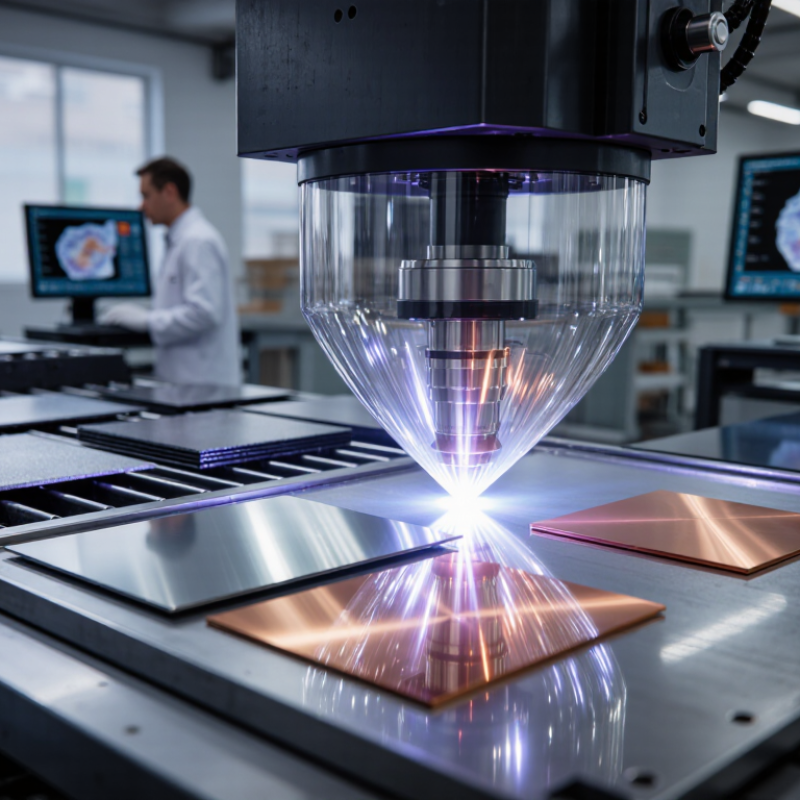
Laser welding joins materials through concentrated heat, usually with limited distortion. Material compatibility depends on absorption, melting behavior, reflectivity, and thermal conductivity. Thickness also changes the process window.
In production trials, stainless steel often produces stable seams with suitable shielding gas and controlled power. Carbon steel can weld effectively, but scale, oil, and rust quickly create pores. Aluminum needs careful energy control because it reflects light and removes heat rapidly. Copper is more demanding for similar reasons. Dissimilar joints, such as steel to aluminum, require precise energy placement and joint design. Metallurgical reactions can create brittle zones.
Surface preparation matters more than many first-time users expect. I inspect fit-up, clean both faces, and check focal position before testing. A narrow gap may cause incomplete fusion. Excessive power can create undercut, spatter, or burn-through. Small samples reveal these issues early. They also expose assumptions. Some plastics can be laser welded, but their optical properties must match the process. One material usually needs to transmit the beam, while another absorbs it. Fillers and pigments can change that balance. I would not approve a material pair from appearance alone. Cross-sections, hardness checks, and tensile tests provide stronger evidence. Results may still vary with coatings, batches, and joint geometry. That uncertainty deserves documentation, not confident guesswork.
Laser welding is suitable for many engineering metals, including copper, aluminum, nickel, steel, stainless steel, and titanium. The chart compares their typical room-temperature thermal conductivity, a key factor in laser welding. Higher conductivity materials transfer heat quickly and generally require higher laser power, tighter beam control, and careful parameter optimization.
Values are representative thermal conductivity figures in W/m·K. Actual results depend on alloy grade, thickness, surface condition, joint design, shielding gas, laser wavelength, and welding speed. Copper and aluminum are weldable but are more demanding because of their high thermal conductivity and reflectivity.
Laser welding suits metals that form stable melt pools under concentrated heat. Stainless steel is widely used because it offers clean seams and limited distortion. Austenitic grades often weld smoothly, especially when joint gaps remain small. Carbon steel can also produce strong welds, but surface rust, oil, and scale may cause porosity. Careful cleaning matters.
Aluminum alloys are lightweight and highly conductive. They require accurate energy control because heat spreads quickly. Their oxide layer must be removed before welding. Titanium can deliver excellent results in controlled conditions. However, it reacts easily with oxygen while hot. Proper shielding must continue until the weld cools.
Nickel alloys are another suitable option for heat-resistant components. Copper and brass are more difficult because they reflect laser energy and conduct heat rapidly. They may need higher power, modified beam settings, or preheating.
Material thickness, joint design, and fit-up strongly affect results. A tiny gap can create underfill or unstable penetration. In production work, technicians should check the first weld through visual inspection and cross-sectional testing. A bright surface does not always mean a reliable joint. That lesson is easy to overlook. Trial welds should compare penetration depth, hardness, distortion, and possible cracking. Even familiar stainless steel can behave differently after forming, coating, or previous heat treatment. Process records improve repeatability, although they cannot replace skilled observation.
China Best: What Materials Can Be Laser Welded?
Special Alloys and Challenging Materials for Laser Welding
Laser welding suits stainless steel, aluminum, titanium, copper, and nickel alloys. Each material absorbs energy differently. Copper reflects infrared light and conducts heat rapidly, demanding precise power control. Aluminum forms oxide layers and may trap hydrogen, causing pores. Titanium needs strict shielding, because oxygen can weaken the weld zone.
The challenge increases when joining dissimilar metals. Aluminum-to-copper joints can develop brittle intermetallic compounds. Nickel alloys may suffer from hot cracking when heat input becomes excessive. Experienced technicians adjust beam focus, travel speed, shielding gas, and joint clearance together. A bright bead is not enough. Internal defects still matter.
Industry demand makes this issue practical. The International Energy Agency reported almost 14 million electric cars sold globally in 2023, increasing battery-related welding applications. The World Stainless Association recorded about 58.4 million tonnes of stainless steel production in 2023. These figures reflect large, varied production needs. However, material datasheets alone cannot guarantee results. Trial welds, cross-section analysis, hardness testing, and leak testing remain essential. Some assumptions fail. Reflective surfaces can mislead operators, and a stable process window may still change between batches.
| Material or Alloy Group | Laser Weldability | Main Technical Challenges | Recommended Process Controls | Typical Applications |
|---|---|---|---|---|
| Austenitic Stainless Steel | Excellent | Distortion, undercut, porosity, and possible chromium-related corrosion concerns if shielding is inadequate. | Use clean joint surfaces, controlled heat input, suitable shielding gas, and consistent travel speed. | Food-processing equipment, medical components, chemical equipment, and precision enclosures. |
| Low-Carbon and Mild Steel | Excellent | Spatter, keyhole instability, hydrogen-related cracking in susceptible grades, and oxidation without adequate gas protection. | Remove oil, rust, and scale; select suitable power density and use preheating when required by thickness or carbon equivalent. | Automotive structures, machinery, sheet-metal assemblies, and general fabrication. |
| High-Strength and Low-Alloy Steel | Very Good | Heat-affected-zone softening or hardening, residual stress, and cold-cracking risk depending on composition and thickness. | Control interpass temperature and cooling rate; use qualified parameters, preheating, or filler metal where necessary. | Pressure-rated parts, transport structures, lifting equipment, and high-strength frames. |
| Aluminum and Aluminum Alloys | Good, with strict parameter control | High reflectivity, high thermal conductivity, oxide-film interference, porosity, hot cracking, and sensitivity to fit-up gaps. | Remove oxide immediately before welding, maintain precise fixturing, use clean shielding gas, and optimize focus and power modulation. | Battery trays, heat exchangers, aircraft structures, vehicle panels, and lightweight frames. |
| Copper and Copper Alloys | Moderate to Good | High reflectivity, very high thermal conductivity, unstable absorption, and risk of spatter or incomplete penetration. | Use an energy source and parameter set suited to copper, maintain tight joint fit-up, and apply precise beam positioning and shielding. | Electrical busbars, motor components, heat-transfer parts, terminals, and power-electronics assemblies. |
| Titanium and Titanium Alloys | Excellent under inert protection | Strong reaction with oxygen, nitrogen, and hydrogen at elevated temperature; discoloration can indicate contamination. | Use high-purity inert shielding, trailing protection, clean tools, and controlled heat input. Protect the weld until it cools sufficiently. | Aerospace parts, chemical equipment, medical devices, and corrosion-resistant structures. |
| Nickel-Based Superalloys | Good, but metallurgy-sensitive | Liquation cracking, solidification cracking, distortion, and changes in precipitation-hardened microstructures. | Use qualified low-heat-input parameters, carefully controlled joint preparation, and compatible filler metal when required. | Turbine components, high-temperature fixtures, chemical-processing parts, and energy equipment. |
| Cobalt-Based Alloys | Moderate to Good | Cracking sensitivity, high hardness, limited ductility, and potential changes in wear-resistant properties. | Minimize thermal gradients, use carefully selected filler material, and verify hardness and crack resistance after welding. | Wear-resistant overlays, valve components, medical parts, and high-temperature tooling. |
| Magnesium Alloys | Moderate | High oxidation tendency, vaporization of alloying elements, porosity, hot cracking, and fire risk from dust or molten material. | Use rigorous surface cleaning, suitable inert shielding, controlled energy input, and appropriate fire-safety procedures. | Lightweight housings, automotive components, aerospace parts, and portable equipment. |
| Galvanized and Zinc-Coated Steel | Good with coating management | Zinc vapor can cause porosity, spatter, weld-pool instability, and fume hazards. | Provide a controlled vent path, adjust focus and speed, use effective fume extraction, and restore corrosion protection after welding. | Automotive body parts, appliances, building panels, and coated structural components. |
| Dissimilar Metal Combinations | Case-dependent | Different melting temperatures, thermal expansion, reflectivity, dilution behavior, and formation of brittle intermetallic compounds. | Optimize beam offset toward the higher-melting or less conductive side, limit dilution, and validate mechanical and corrosion performance. | Copper-to-steel joints, aluminum-to-steel structures, battery connections, and multi-material assemblies. |
China Best: What Materials Can Be Laser Welded?
Key Factors Affecting Laser Weld Quality
Laser welding can join stainless steel, aluminum, copper, titanium, and some nickel alloys. Yet material choice alone does not determine weld quality. Practical trials show that surface condition often causes more defects than the alloy itself. Oil, oxide films, moisture, and fingerprints can disturb energy absorption. Clean the joint carefully, then keep it dry. Small gaps matter. A tight, stable fit helps the beam form a continuous fusion zone.
Laser power, travel speed, and focal position must work as a matched set. Too much power may create deep penetration, undercutting, or excessive spatter. Too little power can leave incomplete fusion between the parts. A focus point set above or below the surface may change bead width noticeably. I have seen a visually smooth bead hide weak internal bonding. That is why cross-section checks and tensile tests remain valuable. Appearance is not proof.
Shielding gas affects oxidation, porosity, and surface color. Its flow should protect the molten pool without creating turbulence. Joint design, clamping pressure, and thermal distortion also need attention. Thin sheets may warp when heat accumulates near one corner. Adjusting the welding sequence can reduce that movement. However, every material responds differently, so fixed settings should not be copied blindly. Record power, speed, focus, gas flow, and inspection results during each trial. Some experiments will fail. That failure can reveal a missing control.
Laser welding suits carbon steel, stainless steel, aluminum, copper, and titanium. However, material selection requires more than checking weldability. Reflectivity, thermal conductivity, thickness, surface condition, and joint design strongly affect penetration and porosity. Laser welding is not equally forgiving.
Carbon steel offers stable absorption and predictable penetration. Stainless steel provides corrosion resistance, but excessive heat can distort thin sections. Aluminum conducts heat quickly and reflects infrared energy, so it often needs higher power and precise beam control. Copper is even more demanding. Its high conductivity can create shallow fusion and unstable keyholes. Titanium can produce excellent joints, but it needs strict shielding from oxygen and nitrogen.
Industry data shows why these choices matter. World Steel Association reported about 1.89 billion tonnes of crude steel production in 2023. The International Aluminium Institute reported roughly 70.6 million tonnes of primary aluminum production that year. The International Energy Agency also recorded more than 14 million electric car sales in 2023, increasing demand for lightweight and conductive materials. These figures indicate scale, not automatic suitability. A practical trial should measure penetration depth, tensile strength, hardness, distortion, and gas protection. Do not trust a clean surface alone. Coatings, oil, oxide films, and small gaps can change the result. Dissimilar joints remain especially difficult because their melting points and thermal expansion differ. A perfect material choice rarely exists. Even experienced engineers sometimes approve a material before testing its actual joint geometry.
Common options include carbon steel, stainless steel, aluminum, copper, titanium, and some nickel alloys.
No. Reflectivity, thermal conductivity, thickness, surface condition, and joint design also affect results.
Remove oil, oxide films, moisture, coatings, and fingerprints before welding.
Aluminum conducts heat quickly and reflects infrared energy.
Laser power, travel speed, and focal position must work together.
Yes. A neat surface can hide poor internal bonding.
Proper gas flow helps reduce oxidation, porosity, and unwanted surface color.
Use suitable clamping pressure and control heat accumulation.
Record power, travel speed, focus position, gas flow, penetration, tensile strength, hardness, and distortion.
Laser welding is a precise joining process that uses a concentrated beam of energy to create strong, narrow welds with minimal heat distortion. Understanding what materials can be laser welded begins with evaluating how a material absorbs laser energy, conducts heat, melts, and solidifies. Commonly suitable metals include stainless steel, carbon steel, aluminum, copper, titanium, and nickel-based alloys, although each requires carefully adjusted power, speed, focus, and shielding conditions.
Special alloys and reflective or highly conductive materials may present challenges, such as inconsistent penetration, cracking, porosity, or excessive heat loss. Weld quality is also influenced by material thickness, surface cleanliness, joint design, fit-up accuracy, and process stability. Selecting the best material for a laser welding application requires balancing strength, corrosion resistance, thermal behavior, appearance, production speed, and cost. By matching material properties with appropriate process parameters and preparation methods, manufacturers can achieve reliable, repeatable, and efficient welded joints.

STYRL Laser