When exploring the world of laser technology, two terms often arise: laser marking and engraving. Understanding what is the difference between laser marking and engraving is crucial for businesses and hobbyists alike. Both techniques utilize lasers, but they serve different purposes and yield varying results.
Laser marking involves altering the surface of a material to create a mark. It is typically less invasive and retains the integrity of the material. This method is often used for barcodes and logos on metals and plastics. In contrast, engraving removes material to produce a deeper design. This can lead to a more permanent and textured finish. Engraving is common on jewelry and trophies.
While the distinctions might seem clear, it’s essential to consider factors like precision and application. Marking might not always provide the longevity needed. On the other hand, engraving can be more time-consuming and costly. As technological advancements evolve, the lines between these processes may blur, leading to new possibilities—and potential confusion—about their proper use.
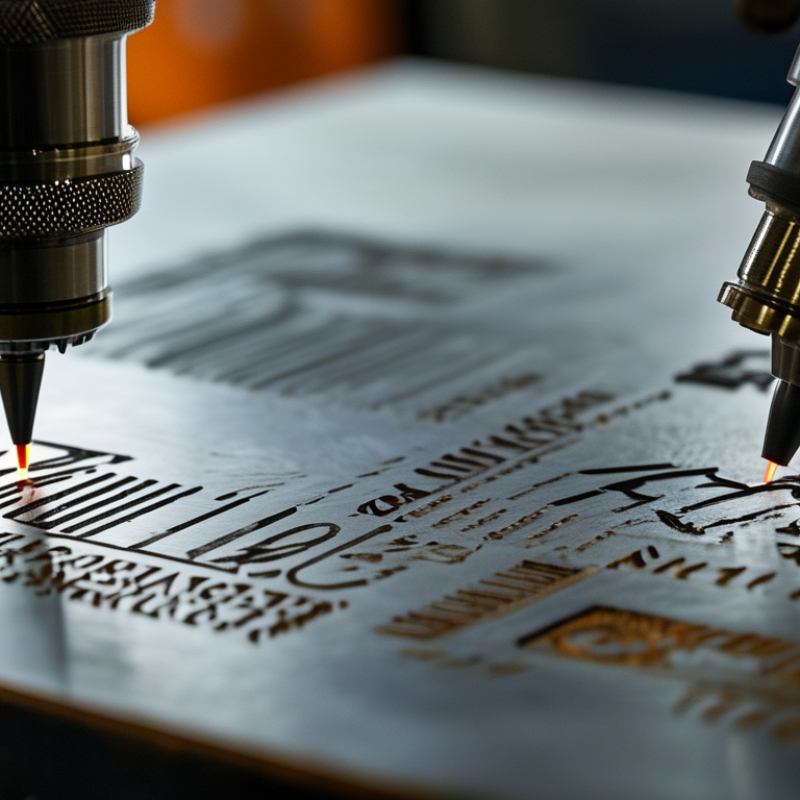
Definition of Laser Marking and Engraving in the Industry
Laser marking and engraving are essential techniques in manufacturing. Their definitions are crucial for understanding their application in various industries.
Laser marking involves applying a mark or a text on a surface using a laser. This process subtly alters the surface material, creating a good contrast. The marks remain on the surface but don’t penetrate deeply. For example, a barcode on a plastic part may be done using this technique. It allows for high-speed marking with minimal material removal and great precision.
Engraving, on the other hand, is more profound and involves removing material from the surface. It creates a permanent design that is noticeable to touch. This technique can produce intricate designs on metals, wood, or glass. However, the depth of the engraving can vary based on the laser's settings. Sometimes, achieving the desired depth requires multiple passes. This may not always be efficient, especially for large quantities.
While both methods serve distinct purposes, it’s essential to choose the right one depending on the project requirements. Accuracy in definition and execution is key in the industrial application of these techniques.
Key Differences Between Laser Marking and Engraving Techniques
Laser marking and engraving are popular techniques used across various industries, including manufacturing, electronics, and jewelry. Understanding the key differences between these techniques is vital for making informed decisions. According to a recent report from the Photonics Industry Association, the global laser marking market is projected to reach over $4.5 billion by 2025, showcasing its significance.
Laser marking typically changes the color of the material's surface without removing material. This method is efficient for producing barcodes, serial numbers, and logos. It's suitable for both metals and plastics. Data reveals that laser marking enhances surface durability and improves traceability. However, the depth of the mark is generally shallow, which can limit the lifespan of the marking in high-abrasion environments.
On the other hand, laser engraving removes material from the surface, creating a deeper and more durable mark. Engraving often requires more energy and time, making it suitable for intricate designs and detailed artwork. Industry reports indicate that engraved markings tend to last longer, making them ideal for parts subjected to harsh conditions. Still, the energy consumption in engraving can be a drawback, leading to higher operational costs. Balancing precision with cost is essential for manufacturers considering these techniques.
Difference Between Laser Marking and Engraving Explained
| Feature |
Laser Marking |
Laser Engraving |
| Depth |
Surface level marking |
Creates deeper grooves |
| Application |
Ideal for logos, barcodes, and serial numbers |
Best for detailed designs and artwork |
| Speed |
Faster due to shallow processing |
Slower because of deeper material removal |
| Material Compatibility |
Works well on various materials including plastics and metals |
More effective on harder materials like metals and glass |
| Finish |
Can leave a smooth finish |
Leaves a textured finish |
| Durability |
Less durable if treated harshly |
High durability and resistance to wear |
Applications of Laser Marking vs. Engraving in Various Industries
Laser marking and engraving have distinct applications across various industries, each serving specific needs and functions. In the automotive sector, laser marking provides essential traceability by marking parts with unique codes. According to a recent industry report, about 70% of automotive manufacturers employ laser marking for quality assurance. This method ensures that components can be tracked throughout the supply chain, contributing to overall efficiency.
In contrast, engraving is often utilized in the jewelry industry, where precision is paramount. The ability to create intricate designs enhances product appeal. Reports indicate that the demand for personalized engraved items has surged, with a 30% increase in sales for custom jewelry in recent years. Some jewelers, however, face challenges in balancing quality and production speed, leading to inconsistencies in engraving outcomes.
Furthermore, the medical industry benefits from both processes. Laser marking is used for labeling instruments and devices, ensuring compliance with strict regulatory standards. Meanwhile, engraving is preferred for creating permanent surgical identifiers. Yet, not all equipment can handle these processes. Some materials may require more thought, as laser marking and engraving aren't universally effective. Balancing technology with material capabilities remains a key consideration for industries looking to optimize their processes.
Material Compatibility: What to Consider for Laser Processes
Material compatibility plays a crucial role in laser processes, especially when distinguishing between laser marking and engraving. Different materials respond uniquely to laser technology. Metals, plastics, and wood all have distinct thermal properties, influencing the outcome of laser applications. For instance, metals often require higher laser power for engraving due to their density. A report from the Laser Institute of America shows that the suitable power settings vary widely, even within the same material type.
In contrast, organic materials like wood and leather can be marked with lower power settings. These materials absorb energy effectively, producing clear engravings or marks. However, variability in moisture content can lead to inconsistent results. A study published in the Journal of Laser Applications noted that 25% of participants experienced issues with wood engraving due to these discrepancies. Understanding material interactions fosters better outcomes but does not guarantee them.
Choosing the right lens and beam focus is equally essential. Each material’s surface finish can dictate how well the laser performs. Smooth surfaces may reflect more light, while rough textures can absorb it differently. Failing to consider these factors could lead to unsatisfactory mark quality. Ongoing research aims to refine processes, but challenges remain. Ignoring the complexities of laser material compatibility can result in wasted resources and time.
Cost Effectiveness: Comparison of Laser Marking and Engraving Production
When comparing laser marking and engraving, cost-effectiveness becomes a key consideration. Laser marking is generally less expensive than engraving. According to industry data, laser marking can save up to 30% in production costs, particularly for high-volume tasks. This efficiency stems from faster processing times and reduced material waste. Marking is ideal for temporary ideas or branding on surfaces like plastic and metal.
Engraving, while offering a deeper and more permanent solution, often requires more time and labor. Reports show that laser engraving can lead to higher production costs, especially for intricate designs. It may require specialized expertise and more extensive setup. This means companies may face higher labor costs and longer lead times. Businesses should weigh these factors to determine which method aligns with their budget.
Tip: Always calculate the total cost of production. Consider both initial and ongoing expenses. Factor in material types and intended use. For one-off projects or short runs, laser marking can be the winning choice. However, if consistency and longevity are priorities, engraving may prove more worthwhile. Understanding these details helps informed decision-making in your production process.
Cost Effectiveness: Comparison of Laser Marking and Engraving Production
This chart compares the cost-effectiveness of laser marking and engraving. The values represent the average costs associated with each process, measured in USD per item, across different materials.
FAQS
: Laser marking is a process that applies a mark or text on a surface using a laser.
Engraving removes material, creating a deeper mark. Marking only changes the surface color without removal.
Both techniques work on metals, plastics, wood, and glass, depending on project needs.
Yes, laser marking can save up to 30% in production costs for high-volume tasks.
Marking depth is shallow, which may limit lifespan in high-abrasion environments.
Yes, engraving often demands more energy, making it less efficient for high-volume production.
Yes, engraving depth can vary based on laser settings and may require multiple passes to achieve desired depth.
Laser engraving is better for intricate designs, though it may incur higher production costs.
They should assess budget, intended use, and production volume. Each method has its pros and cons.
Yes, higher labor costs and longer lead times can be drawbacks, especially for complex projects.
Conclusion
Laser marking and engraving are two distinct techniques used in various industries for decorating and identifying materials. Understanding what is the difference between laser marking and engraving is crucial for selecting the appropriate method for specific applications. Laser marking is a process that alters the surface of a material, creating a contrast through color change without removing material, while engraving involves removing the material itself to create a deeper, more permanent design.
The applications of these techniques vary widely; laser marking is commonly used for barcodes, serial numbers, and logos, while engraving is favored for detailed designs, personalization, and high-quality finishes. When considering material compatibility and cost-effectiveness, laser marking typically requires less investment and is suitable for a wider range of materials, making it a cost-efficient choice for many businesses. In contrast, engraving is ideal for applications demanding durability and a tactile quality.

 STYRL Laser