For global buyers, understanding how does laser welding work begins with the joint, not the machine. A focused laser beam delivers concentrated heat to a precise location. Metal edges melt, flow together, and solidify into a narrow weld. The process can join stainless steel, aluminum, titanium, and dissimilar components under controlled conditions.
Professor William M. Steen, a respected authority in laser material processing, often reminded engineers, “The laser is a tool, not a magic wand.” His point remains practical. Beam power, spot size, travel speed, shielding gas, material thickness, and joint preparation must work together. A bright seam does not always prove a reliable weld. Internal porosity, weak penetration, or distortion may remain hidden without inspection.
Picture a robotic cell welding a thin battery enclosure. The laser moves along the seam with millimeter-level accuracy. Argon shields the molten pool, while sensors monitor temperature and alignment. Small changes matter. A dirty surface can create spatter. Excessive power can burn through the sheet. Insufficient energy can leave an attractive but fragile connection.
Global buyers should request sample welds, cross-section tests, equipment records, and process data. They should also confirm operator training, maintenance support, and material compatibility. Supplier claims need verification. Even experienced teams can overlook changing reflectivity, coating residue, or thermal expansion. The technology is fast and precise, but it is not effortless. Understanding how does laser welding work helps buyers compare realistic performance instead of trusting impressive brochures.
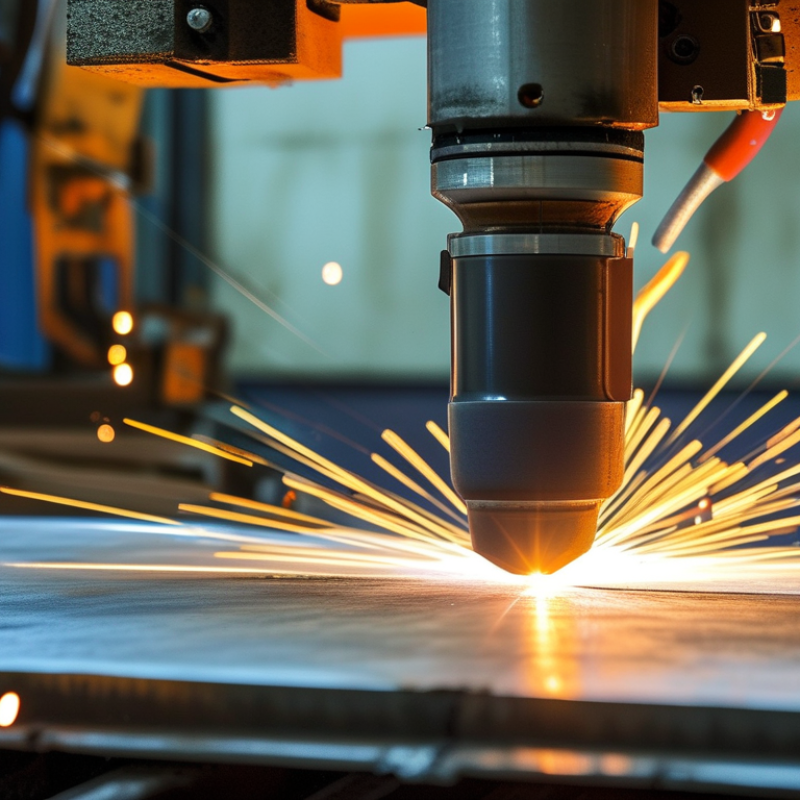
Laser welding uses a concentrated beam of light to join metal parts. The beam creates a small, controlled molten pool at the joint. As it moves, the metal cools and forms a permanent bond. Shielding gas protects the weld from atmospheric contamination. Fixtures keep parts aligned during production.
For global buyers, this process matters because it can deliver narrow welds, low heat distortion, and consistent output. These advantages are valuable for stainless steel housings, precision tubes, battery components, and other detailed assemblies.
A smaller heat-affected area may reduce grinding and post-weld correction. That can lower labor costs across large production runs. It is fast, but not effortless.
Buyers should examine more than advertised laser power. Material thickness, joint design, surface condition, and operator training strongly affect results. A supplier should provide sample welds, inspection records, process parameters, and clear maintenance support. Ask how the system handles voltage changes, replacement parts, safety controls, and local compliance requirements. Remote support can help, though it cannot replace skilled technicians on the factory floor. One overlooked issue is fit-up accuracy. Tiny gaps may cause porosity, weak penetration, or an uneven bead. Laser welding rewards precision, but it can expose poor preparation quickly. A lower purchase price may become expensive when fixtures, training, and rejected parts are included.
For global buyers, laser welding begins with a concentrated beam of light. The beam enters the material through a focusing lens. At the joint, absorbed light changes into intense heat. This heat can melt a narrow pool within milliseconds.
Heat control depends on several linked settings. Laser power changes the energy entering the joint. Welding speed controls how long the material receives that energy. A smaller spot creates deeper penetration, but it also increases the risk of burn-through. Pulse duration matters for thin sheets and delicate components. Shielding gas protects the molten pool from atmospheric contamination.
Operators must also manage beam alignment, clamping pressure, surface cleanliness, and joint fit-up. A gap of only a few tenths of a millimeter can affect penetration. Cameras, temperature sensors, and weld monitoring systems can reveal unstable heat behavior. However, monitoring cannot replace proper procedure testing. Real production often differs from a sample coupon.
That assumption can fail.
Global buyers should request cross-section tests, dimensional records, and repeatability data. They should also confirm material grades, allowable distortion, and inspection methods. Experienced technicians adjust parameters gradually, rather than chasing maximum power. A bright weld is not automatically a strong weld. Stable heat creates consistent fusion, controlled distortion, and fewer rejected parts.
At a constant laser power of 4 kW, increasing travel speed reduces the line energy delivered to the joint. Line energy is calculated as laser power divided by travel speed. The values shown represent incident energy before reflection, conduction, and other process losses; actual absorbed heat depends on material, wavelength, surface condition, beam focus, shielding gas, and process efficiency.
Laser welding suits stainless steel, carbon steel, aluminum, titanium, and selected copper alloys. Each material behaves differently under a concentrated beam. Stainless steel usually offers stable penetration and clean edges. Aluminum conducts heat quickly and may need tighter energy control. Copper reflects much of the laser energy. It often requires specialized process settings and careful surface preparation.
Joint design matters as much as material choice. Butt joints can produce narrow, low-distortion seams when the edges align accurately. Lap joints tolerate small positioning changes, but excessive gaps can weaken penetration. Fillet joints work well for brackets, frames, and sheet assemblies. Their corner geometry must allow the beam to reach the fusion zone without obstruction. Thin sheets may need clamping, because minor movement can change the weld profile.
Global buyers should request material certificates, thickness ranges, joint drawings, and sample weld records. Surface oil, oxide layers, and inconsistent gaps can reduce repeatability. A practical limit is often the fit-up, not the laser itself. This is easy to underestimate. I would also avoid accepting a “universal” parameter sheet without trials. Supplier tests should measure penetration, porosity, distortion, and tensile performance under realistic production conditions. Standards differ between markets, so inspection methods and acceptance criteria must be agreed before production. Even experienced teams sometimes discover that a visually smooth weld needs deeper testing.
| Material or Application | Typical Laser Welding Suitability | Common Material Thickness | Recommended Joint Designs | Why It Works Well | Important Buyer Considerations |
|---|---|---|---|---|---|
| Austenitic Stainless Steel | Excellent for precision welding and clean, narrow welds. | Approximately 0.3–6 mm in a single pass, depending on laser power, joint preparation and production speed. | Butt joint Lap joint Corner joint Fillet joint | Low heat input helps reduce distortion and preserves corrosion-resistant surfaces when shielding is properly controlled. | Specify the stainless grade, surface condition, allowable discoloration, shielding-gas requirements and post-weld cleaning standard. |
| Carbon and Low-Alloy Steel | Excellent for high-speed welding of fabricated parts and structural components. | Approximately 0.5–10 mm, with deeper sections often requiring multiple passes or hybrid welding. | Butt joint Lap joint T-joint Fillet joint | High energy density creates concentrated penetration with a small heat-affected zone. | Control fit-up, surface contamination, cooling rate and hydrogen exposure to reduce porosity and cracking risks. |
| Galvanized Steel | Suitable, but requires process control because zinc vaporizes at a lower temperature than steel. | Approximately 0.5–3 mm for many sheet-metal applications. | Lap joint Stepped lap Butt joint | Fast localized heating can limit the overall heat input and reduce coating damage outside the weld area. | Provide a venting path or controlled joint gap where appropriate; use fume extraction and define the required post-weld corrosion protection. |
| Aluminum and Aluminum Alloys | Good for high-speed welding, although reflectivity, thermal conductivity and hot-cracking sensitivity require careful parameter selection. | Approximately 0.5–6 mm in many production applications. | Butt joint Lap joint Corner joint | Laser welding can produce narrow welds with less distortion than many conventional arc processes. | Identify the alloy and temper, control oxide removal and fit-up, and verify porosity, cracking and mechanical-property requirements. |
| Copper and Copper Alloys | Technically weldable, but more demanding because copper reflects many near-infrared laser wavelengths and conducts heat rapidly. | Approximately 0.2–3 mm for many precision components; thicker parts may need specialized equipment or multiple passes. | Butt joint Lap joint Overlap joint | High power density and suitable beam control can create precise welds for electrical and thermal-conducting components. | Confirm laser wavelength, power margin, surface preparation, electrical resistance limits and protection against spatter. |
| Titanium and Titanium Alloys | Excellent for controlled, high-integrity welding when oxygen and nitrogen contamination are minimized. | Approximately 0.5–5 mm in typical precision work. | Butt joint Lap joint Corner joint | Low heat input and accurate beam positioning help limit distortion and preserve narrow weld profiles. | Use high-purity shielding and, when required, trailing or backing protection; specify acceptable weld color and contamination limits. |
| Nickel-Based Alloys | Good for precision joining, provided heat input and solidification behavior are carefully managed. | Approximately 0.5–5 mm for many components. | Butt joint Lap joint Fillet joint | Concentrated heating can reduce distortion and help maintain dimensional accuracy in heat-resistant components. | Review alloy-specific cracking behavior, filler-metal requirements, shielding, pre-cleaning and qualification testing. |
| Dissimilar Metal Combinations | Possible, but feasibility depends on melting-point difference, intermetallic formation, thermal expansion and joint geometry. | Commonly below 3 mm for precision dissimilar-metal joints. | Lap joint Overlap joint Butt joint with insert | Small, accurately positioned heat input can limit the width of the mixed-metal zone. | Request metallurgical trials, cross-sections and mechanical testing before production approval; filler or interlayer materials may be necessary. |
| Thermoplastics | Suitable when the materials can transmit and absorb the selected laser wavelength in a controlled manner. | Commonly 0.5–5 mm for the joining region. | Lap joint Contour joint Through-transmission joint | Non-contact heating can create clean, sealed joints with limited flash and low mechanical loading. | Confirm resin type, color, additives, clamping pressure, optical transmission, seal requirements and allowable thermal damage. |
| Thin Foil and Small Precision Parts | Excellent when repeatable positioning and low heat input are required. | Approximately 0.05–0.5 mm, depending on material and equipment. | Butt joint Lap joint Micro-overlap | Focused beams and fast travel speeds can minimize burn-through and distortion. | Define clamping accuracy, beam diameter, pulse or continuous-wave mode, inspection method and minimum feature size. |
| Deep-Penetration Components | Suitable for thicker metal sections when a keyhole welding mode is stable and joint access is adequate. | Often above 3 mm; actual depth depends on laser power, material, speed, focus position and number of passes. | Square-butt joint Narrow-gap butt joint T-joint | The vapor keyhole transfers energy efficiently into the workpiece and can produce a deep, narrow weld. | Control fit-up, focal position, plume, shielding and porosity; validate penetration with macrosections or non-destructive testing. |
| Sealed Enclosures and Leak-Tight Assemblies | Very suitable for continuous perimeter welding and hermetic or leak-resistant designs. | Commonly 0.3–3 mm at the sealing wall. | Lap joint Butt joint Continuous perimeter joint | Low distortion and programmable beam paths help maintain dimensional accuracy around the complete enclosure. | Specify leak-rate limits, weld continuity, corner transitions, internal cleanliness and the planned leak-test method. |
| Parts Requiring Low Distortion | Excellent when dimensional stability and limited heat-affected zones are priorities. | Thin to medium sheet sections, commonly 0.3–4 mm. | Butt joint Lap joint Corner joint | Laser energy is concentrated in a small interaction area, reducing the total heat introduced into the assembly. | Joint restraint, weld sequence, clamping, residual stress and thermal accumulation still require process validation. |
For global buyers, laser welding starts with the correct equipment, not just a powerful laser.
A typical setup includes a laser source, focusing head, motion system, worktable, shielding gas supply, and protective enclosure. The laser melts a narrow area while the fixture holds parts in position. This creates clean joints with limited heat distortion.
A wire feeder may be added for gaps or thicker sections. Fume extraction is also important, especially when coatings or alloys produce harmful vapors. Do not overlook safety interlocks. They protect operators from accidental exposure.
The process begins with material verification and surface cleaning. Oil, rust, and paint can cause pores or unstable penetration. Technicians then set laser power, pulse timing, travel speed, focal position, and gas flow. A low-power test helps confirm alignment and penetration before production.
The weld is completed through steady movement, often under camera monitoring. After welding, operators inspect bead width, undercut, cracks, and distortion. Critical parts may require cross-section testing or non-destructive inspection.
In practice, these settings are not universal. A parameter that works on stainless steel may fail on aluminum. Some suppliers provide sample tests, but buyers should request measurable results, inspection records, and operating requirements.
One detail is often underestimated: fixture accuracy. Even a small gap can weaken the joint or force slower welding.
Laser welding uses a concentrated light beam to join metal with limited heat spread. For global buyers, supplier comparison matters more than machine appearance. Quality begins with measurable results. Ask for weld penetration, tensile strength, porosity limits, heat-affected-zone width, and repeatability data. Inspect sample cross-sections, not only polished photographs. Require material certificates, process records, and batch traceability. ISO 3834 and ISO 15614-11 can support a stronger qualification process, but buyers should verify the applicable editions.
Cost is more than the equipment invoice. Measure cycle time, shielding-gas use, fixture costs, maintenance, training, energy, shipping, and rejected parts. The American Welding Society projects that the industry may need 330,000 welding professionals by 2028. Supplier training and remote support therefore carry real financial value. The International Federation of Robotics reported 541,302 new industrial robots installed worldwide in 2023. Automation can improve consistency, yet integration costs may surprise smaller plants. A spreadsheet may still miss downtime.
Supplier audits should include a live production trial. Request a sample weld made on your actual alloy and thickness. Compare results under identical testing conditions. Review calibration intervals, software update procedures, spare-parts availability, and response times across time zones. A polished demonstration can hide weak documentation. No scorecard is perfect. I would also check two long-term customer references, preferably from similar climates and production volumes. A low quotation may simply transfer risk into repairs, delays, and scrap.
Laser welding joins metal parts with a concentrated light beam. The beam forms a small molten pool at the joint. Shielding gas protects the weld from contamination. Fixtures keep parts aligned. It is precise, but not effortless.
It can create narrow welds with limited heat distortion. This may reduce grinding, correction, and labor during production. It suits detailed housings, tubes, battery components, and similar assemblies. Speed helps. Preparation still decides much.
Common choices include stainless steel, carbon steel, aluminum, titanium, and selected copper alloys. Stainless steel often provides stable penetration and clean edges. Aluminum needs careful energy control because it conducts heat quickly. Copper reflects much laser energy. Its settings require more attention.
Butt joints can create narrow seams when edges align accurately. Lap joints tolerate some positioning changes, but large gaps weaken penetration. Fillet joints suit brackets, frames, and sheet assemblies. The beam must reach the fusion zone clearly. Thin sheets may need firm clamping.
Request sample welds made with your actual material and thickness. Review inspection records, process parameters, and material certificates. Check penetration, porosity, distortion, and tensile performance. Ask about maintenance, spare parts, safety controls, and local requirements. Photographs are not enough.
It affects quality greatly. Small gaps may cause porosity, weak penetration, or uneven beads. Oil, oxide layers, and movement can reduce repeatability. The practical limit may be preparation, not laser power. This is easy to underestimate.
Include equipment, fixtures, shielding gas, energy, training, maintenance, shipping, and rejected parts. Also measure cycle time and possible downtime. Automation may improve consistency, but integration can surprise smaller factories. A low quotation may hide repair and scrap costs. The spreadsheet can still miss something.
Use the same alloy, thickness, joint design, and testing conditions. Arrange a live production trial. Review calibration intervals, software updates, spare-parts access, and response times. Check long-term customer references from similar production environments. No scorecard is perfect.
Laser welding is a precise joining method that uses a concentrated light beam to melt and fuse materials, making it important for global buyers seeking strong, clean, and efficient production. Understanding how does laser welding work helps buyers evaluate its advantages, including narrow welds, limited heat distortion, fast processing, and suitability for automated manufacturing. The process is especially effective for metals such as steel, stainless steel, aluminum, and selected alloys, provided that material thickness, joint design, surface condition, and fit-up are properly controlled.
A reliable laser welding system typically includes a laser source, focusing optics, motion equipment, shielding gas, workholding tools, and monitoring controls. Key process steps include preparation, alignment, parameter setting, welding, inspection, and post-weld evaluation. When comparing suppliers, global buyers should consider weld quality, repeatability, equipment capability, total operating cost, maintenance support, operator training, delivery reliability, and compliance with applicable standards. A balanced assessment helps buyers select a solution that meets technical requirements while supporting long-term productivity and consistent quality.
STYRL Laser