Laser marking has become a crucial process across various industries. It allows for precise, permanent markings on numerous materials. According to Dr. Emily Chen, a leading expert in laser technology, "The versatility of laser marking expands the range of materials we can use." This raises an important question: what materials can be laser marked?
Materials such as metals, plastics, glass, and wood respond remarkably to laser marking. Each material behaves differently under the laser's influence. For instance, anodized aluminum offers excellent results due to its surface treatment, while certain plastics may melt if not properly managed. Understanding these intricacies can make or break the quality of the final product.
However, the choice isn’t always clear-cut. The specific type of laser and its settings can significantly impact outcomes. Factors like speed, power, and frequency must be adjusted depending on the material. This complexity highlights the need for expertise in the field. By exploring the top materials effectively, one can enhance the quality of laser marking, yet the challenge of mastering every material remains to be addressed.
Understanding Laser Marking Technology and Its Applications
Laser marking technology is becoming increasingly popular across various industries. This method uses focused laser beams to etch designs or information onto surfaces. Its precision makes it suitable for many materials, ranging from metals to plastics. Unlike traditional marking methods, laser marking does not involve inks or chemicals, which means it creates less waste. This process ensures a clean and permanent mark, making it reliable for branding and product identification.
Understanding how laser marking works is key to appreciating its application. The laser beam heats the surface, vaporizing the material to create a mark. Different settings can adjust the depth and clarity of the marking. However, achieving the desired results can require trial and error. Each material interacts uniquely with the laser, leading to varying outcomes. For instance, metals might require higher power settings than plastics. Additionally, the quality of the marking may depend on the type of laser used. It's essential for users to conduct tests and refine their techniques to master this technology fully.
Exploring the Characteristics of Popular Laser Marking Materials
Laser marking is a highly effective technique used in various industries. Many materials can be marked using lasers, each with unique characteristics.
For example, metals like stainless steel and aluminum provide excellent contrast when marked.
They reflect light and are durable, ideal for identification tags and serial numbers. On the other hand, plastics such as ABS and PMMA are widely used. They allow for detailed designs and are resistant to fading.
According to a report by Research and Markets, the laser marking market is projected to grow significantly over the coming years. This growth is driven by the demand for
high-quality, durable markings on products. Understanding material properties can help in making informed decisions about laser marking applications.
Tip: Always test a small area before marking large surfaces. This minimizes mistakes and helps adjust laser settings for optimal results.
Another material gaining traction is ceramics. They require specific laser technologies due to their hardness. Proper laser settings are crucial to avoiding surface damage while achieving clear markings.
Tip: Keep your laser equipment well-maintained to ensure consistent results across different materials. Regular calibration is key to maintaining marking quality.
The Benefits of Using Metal for Laser Marking Processes
Laser marking has gained significant traction in various industries, especially for metal applications. The benefits of using metal for laser marking processes are substantial. Metals like stainless steel and aluminum provide excellent durability and resistance to corrosion. According to the International Society of Automation, metal laser marking can last up to 30 years without fading, making it ideal for identification and branding.
One key advantage of laser marking on metals is precise engraving. A study by the Laser Institute of America highlights that laser markings can achieve a resolution of up to 1000 DPI. This precision enhances the quality of barcodes, logos, and serial numbers. Furthermore, the process is non-contact, allowing for minimal material waste, a crucial factor for sustainability.
Tips: Always conduct a test mark before starting a large batch. This ensures that the settings are optimized for the metal type. Consider the surface finish; a rough surface can affect the quality of the marking. Selecting the correct wavelength and power settings is essential for achieving the best results. Engravers should also be cautious of thermal distortion, particularly with thin materials. The right technique can prevent these imperfections, ensuring a high-quality final product.
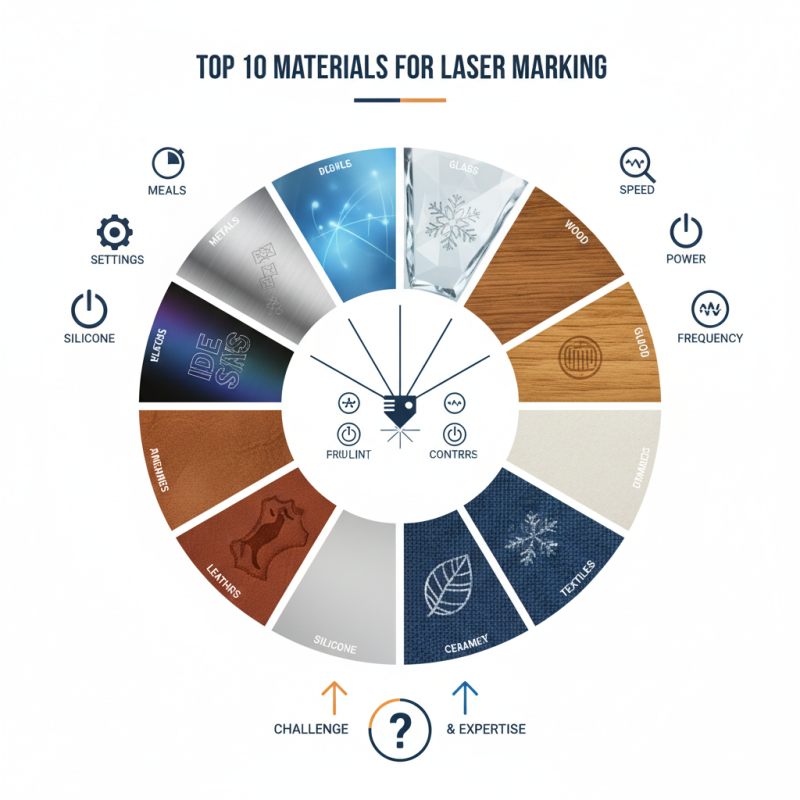
Top 10 Materials for Laser Marking
Choosing Plastics: Versatility in Laser Marking Techniques
When considering plastics for laser marking, versatility stands out as a key advantage. Plastics like acrylic, polycarbonate, and PET offer excellent marking results. Their surface properties allow for high-resolution markings, which is crucial in industries such as automotive and electronics. Research from the Laser Institute of America indicates that over 40% of industrial laser marking applications utilize plastic substrates, showcasing their popularity and utility.
The efficiency of laser marking on plastics also deserves attention. Different laser types achieve varied effects on plastic materials. For instance, CO2 lasers excel with organic plastics, creating clear engravings. Meanwhile, fiber lasers can mark on engineered plastics with remarkable precision. Data shows that speed of processing can reach up to 1000 mm/sec, significantly reducing production time.
However, manufacturers face challenges. Specific plastics may require pre-treatments to enhance laser marking results. Additionally, some plastics could produce harmful fumes during marking, demanding adequate ventilation systems. Understanding these aspects is vital for optimizing the marking process while ensuring safety and compliance with environmental standards. Balancing quality and practicality remains an ongoing quest within the industry.
Innovative Use of Wood and Glass in Laser Marking Design
Laser marking on wood and glass has opened new avenues for creativity and design. These materials work exceptionally well with laser technology, offering detailed and precise designs. A report by the International Society of Laser Marking states that wood can achieve intricate textures and patterns. This customization adds a unique touch to products.
When using glass, the key is to choose the right laser settings. Depending on the thickness, the power and speed must be calibrated to avoid cracking. Recent advancements show that using a CO2 laser can produce remarkable results on glass surfaces. The contrast from engraving enhances visual appeal significantly, making items more attractive.
Tips: Always test on a small section first. This will help you identify the optimal settings. Pay attention to the texture of the wood; differences can affect the final outcome. For glass, avoid high temperatures to prevent damage. Precise laser marking can yield stunning effects, but errors can be costly. Being aware of these details can elevate your design game.
FAQS
: It uses focused laser beams to etch designs onto surfaces.
It’s suitable for metals, plastics, and more.
The laser beam heats the surface, vaporizing the material.
Yes, it creates a clean, permanent mark without inks or chemicals.
Some plastics need pre-treatments for better results and may release harmful fumes.
Different lasers interact uniquely with materials, requiring specific adjustments for optimal results.
Achieving desired results can require multiple tests and refinements.
Yes, processing speeds can reach up to 1000 mm/sec, enhancing efficiency.
Some plastics release harmful fumes that need to be managed.
It’s vital, as manufacturers continually seek improvements while ensuring safety.
Conclusion
Laser marking technology is a versatile and efficient method used across various industries for branding, engraving, and labeling. Understanding what materials can be laser marked is crucial for achieving high-quality results. This technology works effectively on metals, which provide excellent contrast and durability, making them ideal for applications requiring longevity. Plastics are another popular choice, offering versatility in design and application, while innovative uses of wood and glass are gaining traction for their aesthetic appeal in personalized products.
Each material has unique characteristics that influence the laser marking process, including its absorption properties and surface texture. By exploring these materials, businesses can optimize their laser marking techniques to enhance durability and visual impact, ultimately meeting their specific needs and creative aspirations.

 STYRL Laser