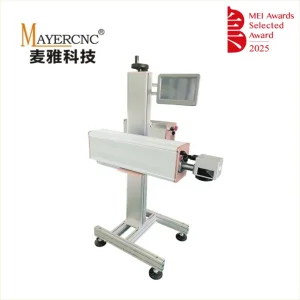
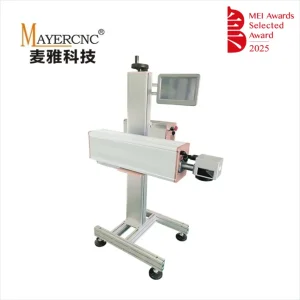
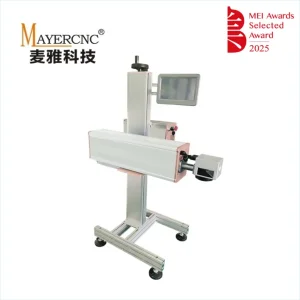
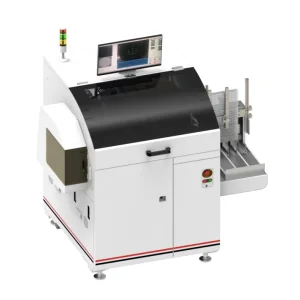
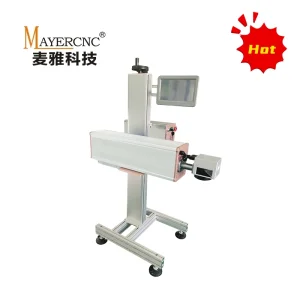
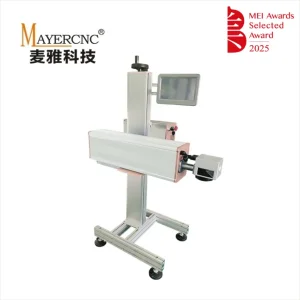
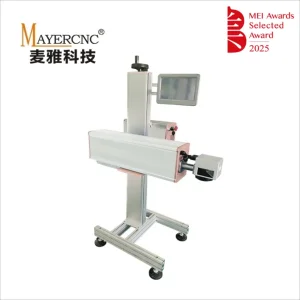
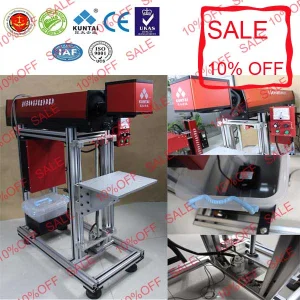
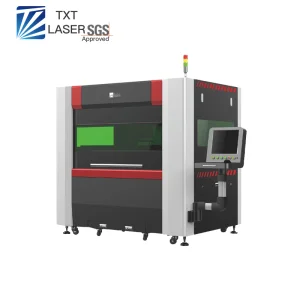
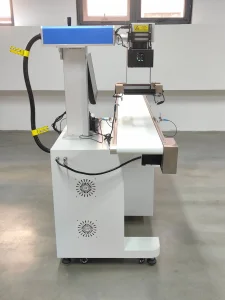
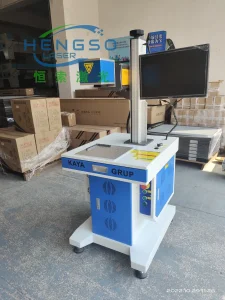
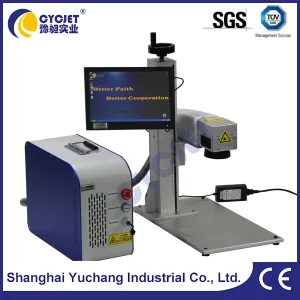
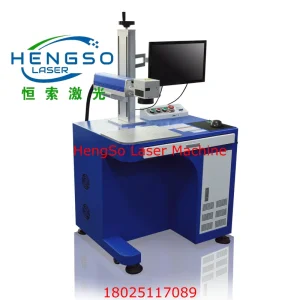
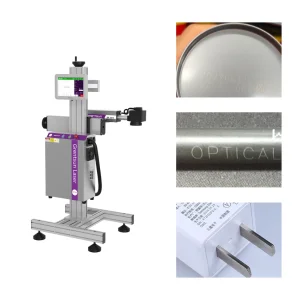
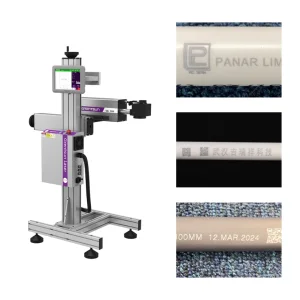
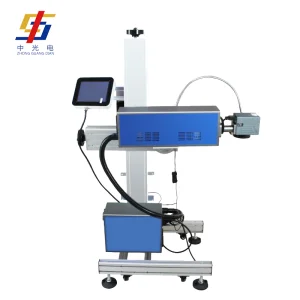
Engineered for integration into automated high-throughput production lines in Hai Phong industrial parks.
Hai Phong is rapidly positioning itself as Northern Vietnam's leading industrial and logistics hub. The expansion of economic development zones such as DEEP C Industrial Zones, VSIP Hai Phong, Nam Cau Kien, and Trang Due Industrial Park has attracted significant global investments in electronics manufacturing, automotive components, logistics packaging, and maritime heavy machinery. Consequently, manufacturing processes are shifting towards higher automation, zero defect rates, and comprehensive supply chain traceability.
With major export markets including the European Union, United States, and Japan enforcing strict regulatory requirements (such as EU MDR for medical parts, automotive safety standards, and ESG environmental mandates), permanent marking has become critical. In response, modern factories in Hai Phong are moving away from traditional ink-jet printing and mechanical engraving. Instead, they are adopting CO2 laser marking systems as a cleaner, permanent, and highly cost-efficient alternative.
While fiber lasers excel in metal surface engraving, CO2 laser marking systems, operating at wavelengths from 9.3 μm to 10.6 μm, are the industrial standard for non-metal materials. These materials include engineering plastics (such as ABS, polyimides, and PET), packaging glass, organic wood, paperboard, and anodized aluminum. This technological flexibility makes CO2 lasers essential for packaging assembly, FMCG bottling, electronics encapsulation, and heavy logistics tagging.
Understanding the system physics and mechanical design of CO2 lasers helps engineers select the optimal solution for their production lines. Our systems are built around RF-excited (Radio Frequency) metal-sealed tubes rather than standard glass tubes. This design offers several distinct advantages:
Delivers precise beam power control, consistent pulse frequency, and a service life exceeding 100,000 hours without gas refills.
High-speed closed-loop digital galvanometer systems enable marking speeds up to 12,000 mm/s without sacrificing quality.
Equipped with TCP/IP, Modbus, and standard digital I/O protocols, easily connecting with main smart factory architectures.
As a key provider of industrial laser marking and coding systems, Ningbo STYRL Laser Co., Ltd. has spent over a decade delivering high-performance solutions worldwide. Founded in 2014 in Ningbo, China, the company has grown from a specialized laser assembly workshop into a global high-tech enterprise. Today, we handle everything from optical research and development to software engineering and mechanical assembly.
Our modern manufacturing facility features advanced optical testing equipment, CNC precision machining centers, and automated assembly systems. This setup ensures that every laser marker meets international quality and safety standards. Our product catalog includes fiber, CO2, and UV laser systems, built to handle the demands of automated production lines.
We work closely with partners across Southeast Asia—especially in rapidly growing manufacturing centers like Hai Phong, Vietnam. To support these operations, STYRL Laser offers dedicated technical service, quick spare parts delivery, and custom engineering design. Our local support teams help factories integrate laser systems with existing assembly lines, PLC units, and MES networks, minimizing downtime and maximizing productivity.
Industrial laser markers must perform reliably under specific production floor conditions. Here is how our CO2 and specialized laser solutions are deployed in local manufacturing plants:
In electronic assemblies (such as those at VSIP Hai Phong), high component density requires precise marking. Our high-precision systems mark micro QR codes, batch numbers, and component identifiers directly onto PCBs and epoxy casings without causing thermal stress or electrical damage.
High-speed production lines require reliable coding. Our flying laser solutions print expiration dates, batch numbers, and barcodes onto cardboard, paper, glass bottles, and PET packaging at high speeds, offering a clean and permanent alternative to ink-jet printers.
Traceability in the automotive supply chain requires marking that survives harsh environments. Our systems are engineered to mark clear, deep, and permanent identification codes on cast steel, aluminum alloys, and high-impact structural components.
Hai Phong's port facilities require logistics tags that resist corrosion and weathering. Our lasers create high-contrast, durable markings on anodized aluminum and polymer tags that remain legible under marine conditions.
Our commitment to innovation ensures that our systems are built for future manufacturing requirements:
All STYRL Laser machines are manufactured under strict ISO 9001:2015 quality management procedures. They comply with international standards including CE, RoHS, and FDA CDRH laser safety guidelines, making them suitable for global markets.
Explore our full line of fiber, CO2, and UV laser marking systems optimized for industrial operations.
Technical support, integration assistance, and system operational questions answered by our engineering team.
Our RF-excited metal-sealed CO2 laser sources are rated for a service life of 100,000+ hours. Unlike glass tube systems that degrade quickly due to gas leakage and thermal stress, RF tubes maintain stable power output and can be re-gassed after long-term service.
Wavelength selection depends on the target substrate. The 10.6 μm wavelength is ideal for general organic materials like wood, paper, cardboard, and glass. For engineering plastics, especially PET, the 9.3 μm wavelength is preferred. It is highly absorbed by the polymer structure, creating a clean, high-contrast mark without burning the material.
Yes. Our laser marking machines feature standard industrial communication protocols, including Modbus, TCP/IP, and digital I/O. This allows for direct connection to PLCs, barcode scanners, and factory MES networks for automated batch coding.
We provide local technical support for manufacturers in Northern Vietnam, including Hai Phong, Hanoi, and Bac Ninh. Our services cover on-site installation, line integration, operator training, maintenance, and rapid spare parts delivery.
No, laser marking is a non-contact process that does not require ink, ribbons, or solvents. The only regular maintenance involves keeping the protective optic lenses clean and clearing dust from the exhaust filters, which helps reduce ongoing operational costs.
Our systems include safety features such as interlocked enclosures, emergency stop buttons, and keyed ignitions. They are designed to meet Class 1 safety standards when fully enclosed, or Class 4 when integrated into production lines, in line with international safety regulations.
 STYRL Laser