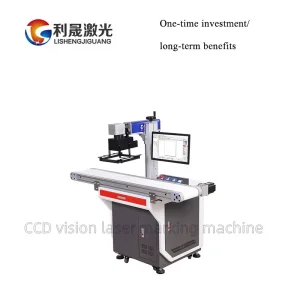
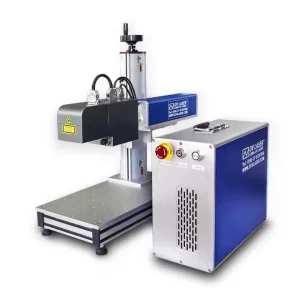
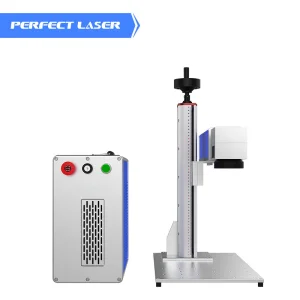
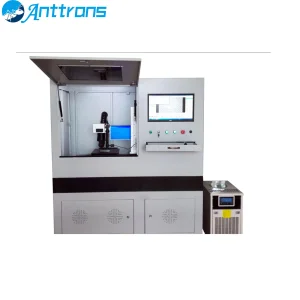
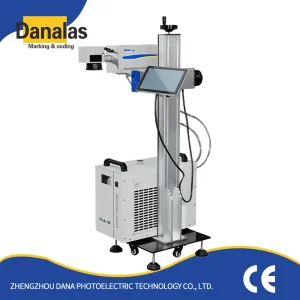
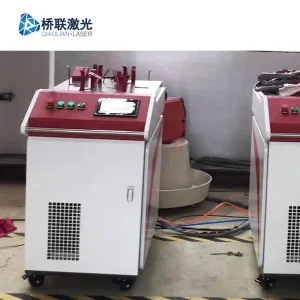
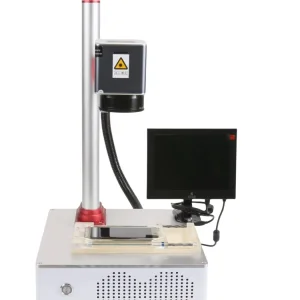
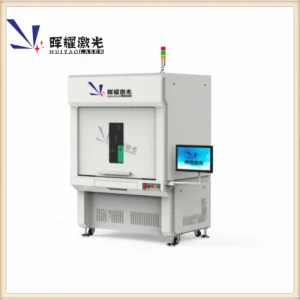
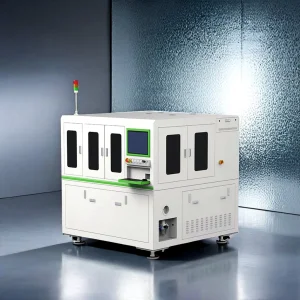
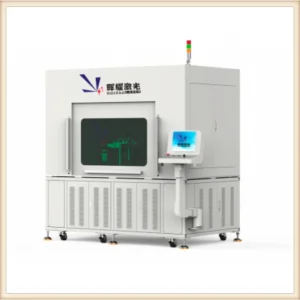
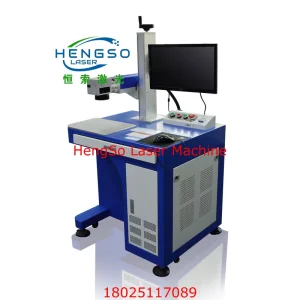
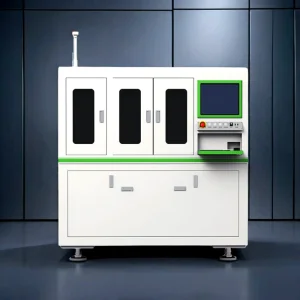
The industrial world is undergoing a significant shift from superficial marking to deep laser engraving. Driven by the demands of Industry 4.0, the requirement for permanent, forgery-proof, and high-contrast identification on components that endure harsh environments—such as engine blocks, turbine blades, and oil drilling tools—has never been higher. Deep laser engraving, typically defined as removing material to depths exceeding 0.1mm up to several millimeters, has become a cornerstone of modern manufacturing.
In China, the supply chain for these machines has evolved from simple assembly to sophisticated R&D hubs. As a leading manufacturer, STYRL Laser integrates MOPA technology and high-power fiber sources (ranging from 100W to 500W) to achieve high-speed material ablation without compromising the structural integrity of the substrate. This technical evolution allows for faster cycle times, which is critical in global automotive and aerospace supply chains.
Maintaining a minimal Heat Affected Zone (HAZ) is paramount for aerospace components to prevent micro-cracking during thermal cycling.
Unlike ink or labels, deep engraving remains legible after sandblasting, heat treating, or heavy abrasive wear in industrial environments.
For high-end luxury goods and electronics, the depth adds a tactile premium feel that mechanical engraving cannot replicate with such precision.
The future of deep laser engraving lies in the convergence of Ultra-Fast Lasers (Picosecond/Femtosecond) and AI-driven vision systems. While traditional nanosecond fiber lasers remain the workhorse for metal deep engraving, the industry is moving towards cold ablation for sensitive materials.
Ningbo STYRL Laser Co., Ltd. is a high-tech enterprise specializing in laser processing technology, positioned as a Laser Marking Machine Manufacturer | Fiber Laser Engraving & Industrial Coding Solutions provider. Founded in 2014, STYRL has spent a decade refining the science of laser-matter interaction.
Our commitment to the E-E-A-T principle (Experience, Expertise, Authoritativeness, and Trustworthiness) is reflected in our rigorous R&D and ISO-certified manufacturing processes. By providing substantial Information Gain through our customized industrial solutions, we help our clients transcend basic marking to achieve high-value precision manufacturing.
A: Fiber lasers (1064nm) utilize a photothermal process, making them ideal for high-speed metal ablation. UV lasers (355nm) use a photochemical "cold processing" method, perfect for thin plastics or glass where heat must be minimized to avoid cracking or charring.
A: Consistency is achieved through stable beam quality (M² < 1.3) and high-quality f-theta lenses. For advanced requirements, STYRL integrates CCD vision systems to ensure the beam remains perfectly focused relative to the material surface.
A: Yes, a 100W MOPA or Q-switched fiber laser is the industry standard for mold tools. It balances high pulse energy for material removal with the ability to maintain fine detail in complex geometries.
 STYRL Laser