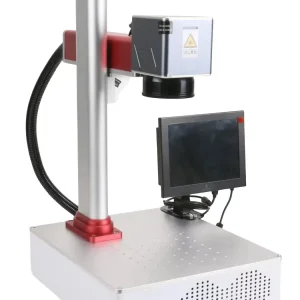
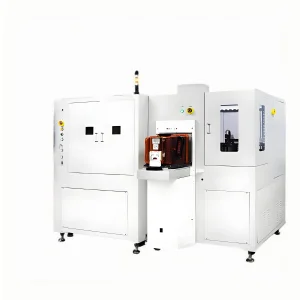
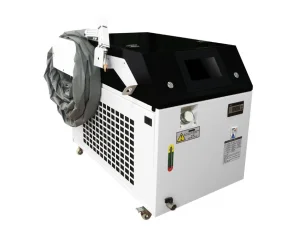
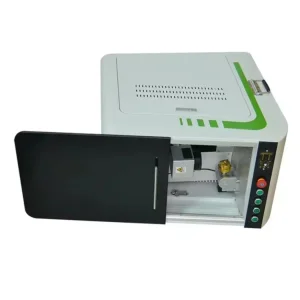
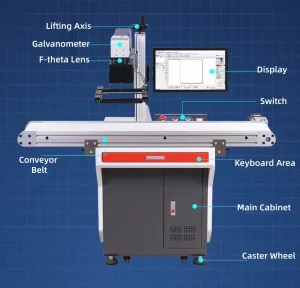
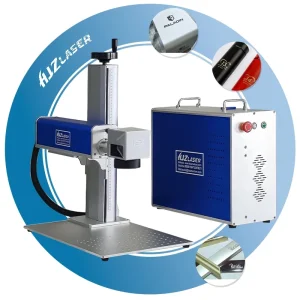
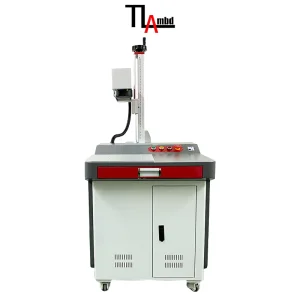
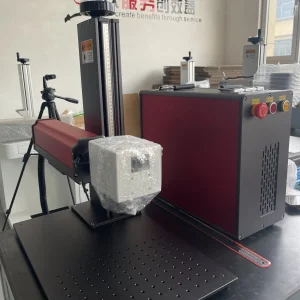
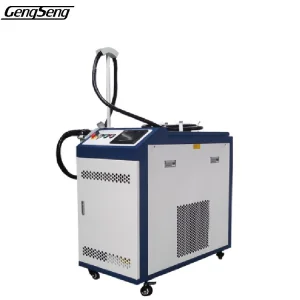
Top China Jewelry Laser Engraving Systems Factories & Exporters

Advanced Precision Solutions: Defining the Future of High-End Jewelry Customization and Industrial Traceability.

The Global Landscape of Jewelry Laser Technology

The global jewelry market is undergoing a paradigm shift from traditional craftsmanship to high-precision digital manufacturing. As of 2024, the demand for Jewelry Laser Engraving Systems has surged, driven by the need for intricate personalization, anti-counterfeiting serialization, and the rise of boutique design houses. China, led by hubs like Ningbo and Shenzhen, has emerged not just as a manufacturer, but as a global R&D powerhouse for fiber and UV laser integration.
0.01mmPrecision Accuracy
100k+Hours Service Life
35%Efficiency Increase
CE/FDAGlobal Compliance

Technical Roadmap: Beyond Simple Marking

MOPA Technology Evolution

Unlike standard Q-switched lasers, MOPA (Master Oscillator Power Amplifier) technology allows for adjustable pulse duration. For jewelry exporters, this means the ability to create color marking on titanium and high-contrast blacks on silver without damaging the structural integrity of the piece.

3D Dynamic Focusing

Modern systems now incorporate 3-axis galvanometer controls. This allows for seamless engraving on curved surfaces—essential for rings, bangles, and watch casings—without manual adjustment, ensuring uniform depth across the entire geometry.

AI-Powered Vision Positioning

Integration of high-definition cameras and AI algorithms allows the system to automatically recognize the orientation and shape of the jewelry. This "Search and Engrave" capability reduces human error and maximizes throughput in industrial settings.

China's Manufacturing Resilience: The Ningbo STYRL Advantage

Ningbo STYRL Laser Co., Ltd. exemplifies the strength of the Chinese laser supply chain. Founded in 2014, STYRL has transitioned from a component integrator to a vertically integrated leader.

The resilience of China's jewelry laser factories lies in their ecosystem density. By locating R&D near major port cities like Ningbo, exporters can provide:
  • Rapid Prototyping: Turning client requirements into functional machine designs within weeks.
  • Cost Efficiency: Leveraging local semiconductor and optical fiber production to reduce end-user costs by 30-50% compared to European counterparts.
  • Logistics Agility: Direct access to global shipping lanes ensures that spare parts and new systems reach North American and European markets with minimal lead times.

Localized Support & Global Compliance

Operating in international markets requires more than just high-quality hardware. Our systems are engineered to meet FDA (CDRH) standards in the USA and CE (EN 60825-1) safety protocols in the EU. This includes localized software interfaces in over 15 languages and remote diagnostic support that bridges time zone gaps, ensuring your production line never stops.

Frequently Asked Questions (FAQ)

Q: What is the difference between Fiber and UV lasers for jewelry?
A: Fiber lasers are the workhorses for metals (gold, silver, titanium), offering high speed and deep engraving. UV lasers, or "cold lasers," are better for delicate materials or ultra-fine marking on heat-sensitive precious stones and plastics, as they minimize the thermal effect.
Q: Can your systems handle ring interior engraving?
A: Yes. By utilizing a rotary axis attachment, our systems can perform 360° continuous engraving on both the interior and exterior of rings and bracelets with perfect alignment.
Q: How do you ensure the authenticity of exported components?
A: We partner directly with leading source providers like Raycus, IPG, and JPT. Every machine comes with a verifiable source certificate to ensure the laser generator meets the advertised lifespan and stability.